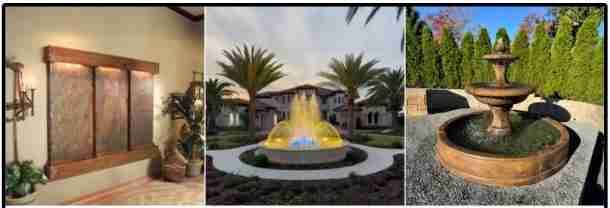


Few outdoor features stop people in their tracks the way a fire fountain does. There’s something almost magnetic about watching flames dance above a sheet of flowing water. It doesn’t make logical sense, and that’s exactly what makes it so captivating. Fire and water fountains have moved from high-end resort lobbies and luxury pool decks into residential backyards over the past several years, and for good reason. They combine the relaxing sound of moving water with the warmth and glow of an open flame, creating an atmosphere that no other single feature can match.
But buying one isn’t quite as simple as picking out a traditional fountain. Fire and water features involve gas lines, ignition systems, specific materials, and clearance requirements that most homeowners haven’t dealt with before. If you’ve seen one of these features at a restaurant or a neighbor’s house and thought “I want that,” this is the article that fills in the details. We’re going to walk through how fire fountains actually work, what your fuel and material options are, what installation looks like, and what you should expect to spend.
How Fire and Water Fountains Work
The concept behind a fire and water fountain is simpler than it looks. Two separate systems operate independently inside the same unit. The water side runs on a recirculating pump, just like any standard outdoor fountain. Water flows from a reservoir, up through the bowl or basin, spills over the edge, and cycles back through the pump. The fire side runs on a gas burner, typically fueled by either natural gas or propane, that sits in the center of the bowl above the water line. The flame burns above the water’s surface while the water flows around and beneath it.
The two elements never actually interfere with each other. The gas burner is sealed and elevated so water doesn’t reach the flame ports, and the water channels are routed around the burner housing. The result is a feature where fire and water appear to coexist in the same space, even though they’re operating on completely separate paths. Most units include a stainless steel burner pan, a gas orifice sized for the chosen fuel type, lava rock or fire glass as a burning media, and a copper or stainless scupper that directs water flow over the bowl’s edge.
Material Options: What Holds Up and What Looks Best
The material your fire and water bowl is made from affects everything: how it looks, how long it lasts, how much it weighs, and what it costs. There are three primary materials you’ll encounter when shopping for these features, and each one has distinct strengths.
GFRC (Glass Fiber Reinforced Concrete)
GFRC is the most popular material for fire and water bowls right now, and it’s easy to see why. It’s roughly 50% lighter than traditional poured concrete, significantly stronger, and resistant to cracking in freeze-thaw cycles. The glass fibers embedded in the concrete mix give it tensile strength that standard concrete simply doesn’t have. Manufacturers like The Outdoor Plus produce their entire line of fire and water bowls in GFRC, and they’re available in a wide range of colors and finishes including smooth, metallic, and rustic textures. Because the color is cast throughout the material rather than applied as a surface coating, it won’t peel or chip over time. Each bowl is hand-poured, so expect slight variations in color and texture from unit to unit.
Copper
Hammered copper fire and water bowls are at the premium end of the market, and they earn that position. Copper is naturally weather-resistant, develops a rich patina over time, and conducts heat in a way that creates a warm glow around the bowl — even when the flame is modest. The visual effect of firelight reflecting off a hammered copper surface with water sheeting over the edge is about as dramatic as outdoor features get. Copper units tend to cost more than GFRC, but they’re also exceptionally durable. If you’re placing a fire and water fountain in a prominent location where it needs to look striking from day one, copper is hard to beat. Copper bowls also pair beautifully with fountain lighting, since the warm metal tones amplify the glow of both flame and LED.
Cast Concrete and Cast Stone
Traditional cast concrete and cast stone fire bowls are heavier and more affordable than GFRC or copper. They work well in settings where the bowl will sit on a solid surface and won’t need to be moved. The weight can actually be an advantage in windy locations, since a heavier bowl stays put. The tradeoff is that standard concrete is more prone to hairline cracking over time, especially in climates with hard freezes, and it’s more difficult to ship without damage. If you’re in a mild climate and want a classic, substantial look at a lower price point, cast concrete is a solid choice.
Natural Gas vs. Propane: Choosing Your Fuel Source

Every fire and water fountain runs on gas, and the two options are natural gas (NG) and liquid propane (LP). This is one of the first decisions you’ll need to make, because the burner orifice and gas pressure requirements are different for each fuel type. Most manufacturers offer both configurations, but the bowls are not interchangeable without a conversion kit.
Natural gas is the preferred choice if you have an existing gas line on your property or plan to run one. Once the line is in and connected, you have an unlimited fuel supply with no tanks to refill or swap. The flame burns cleanly, the operating cost is relatively low, and you never have to think about running out of fuel mid-evening. The downside is that installation requires a licensed gas technician to run and connect the line, which adds to the upfront cost. You’re also locked into one location unless you extend or relocate the gas line later.
Propane gives you more flexibility in placement since the tank can sit nearby without a permanent gas line. This makes propane a better fit for renters, for features placed far from the house, or for homeowners who want the option to move the unit later. A standard 20-pound propane tank will run a typical fire bowl for 8 to 12 hours depending on the BTU output and flame height. The tradeoff is that you’ll need to monitor tank levels, swap or refill tanks periodically, and store the tank somewhere discreet. Some self-contained units include a hidden compartment that conceals the propane tank inside the base, which keeps the setup looking clean.
Ignition Systems: Match Lit vs. Electronic
Fire and water fountains typically come with one of two ignition options. A match lit system is the simpler of the two. You turn on the gas valve, hold a long lighter or match near the burner, and the flame ignites. It’s reliable, affordable, and has no electronic components that can fail. The drawback is that you need to physically light it each time, which means bending over the bowl with a flame source.
Electronic ignition systems are more convenient and increasingly popular. These use a 12-volt spark igniter to light the burner at the push of a button or the turn of a key. Higher-end electronic systems also include a flame sensor that automatically relights the burner if wind blows it out. If you’re planning to use your fire fountain regularly for entertaining, the convenience of electronic ignition is worth the upgrade. Just keep in mind that electronic systems add cost to the unit and require a low-voltage electrical connection in addition to the gas line.
Popular Styles and Configurations
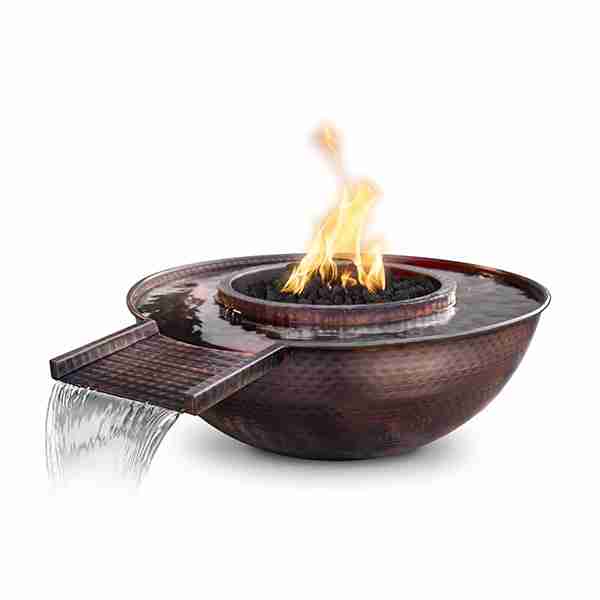
Fire and water features come in more shapes and configurations than most people realize. The most common styles you’ll encounter include:
- Round fire and water bowls: The classic configuration. A round bowl with a centered burner and water spilling over one side (single scupper) or all sides (360-degree spill). Sizes typically range from 24 inches to 60 inches in diameter. Round bowls work well as standalone patio features or mounted on columns beside a pool.
- Square and rectangular bowls: These offer a more architectural, contemporary look. Rectangular fire and water bowls are popular along pool edges and on modern patios where clean geometry matches the surrounding hardscape.
- Self-contained units: These are complete, ready-to-install systems that include the bowl, pedestal or base, water reservoir, pump, and burner assembly all in one package. Self-contained fire fountains are the easiest to install because the water system is built in. You just need to connect the gas line and add water.
- Column and tower designs: Taller, more sculptural fire and water features that stack elements vertically. Water cascades down the column while fire burns at the top. These make dramatic statement pieces at entryways or in the center of a courtyard.
The style you choose depends partly on taste and partly on where the feature will live. A low-profile round bowl works beautifully at the edge of a pool. A tall column design makes more sense as a freestanding centerpiece on a patio. If you’re not sure what scale or style fits your space, browsing real product photos is a good place to start before committing to a specific design.
Safety Considerations and Clearance Requirements
Because fire is involved, placement and clearance matter more with these features than with a standard water fountain. Most manufacturers and local fire codes require a minimum distance between the flame and any combustible material, including overhanging trees, patio umbrellas, pergola beams, and outdoor furniture cushions. A good rule of thumb is to maintain at least three to five feet of clearance above the flame and two to three feet on all sides, though you should always check the specific manufacturer guidelines and your local building codes.
The surface beneath the feature matters too. Fire and water bowls should sit on a non-combustible, level surface like concrete, stone, or pavers. Wood decking is generally not recommended unless the manufacturer specifically rates the unit for deck installation with a heat shield or elevated base. Wind is another consideration. High winds can push flames sideways, which is why electronic ignition systems with flame sensors are worth considering in exposed locations. Most modern gas burners are designed to resist moderate wind, but in consistently windy areas, a glass wind guard or deflector can help stabilize the flame.
Installation: What’s Involved
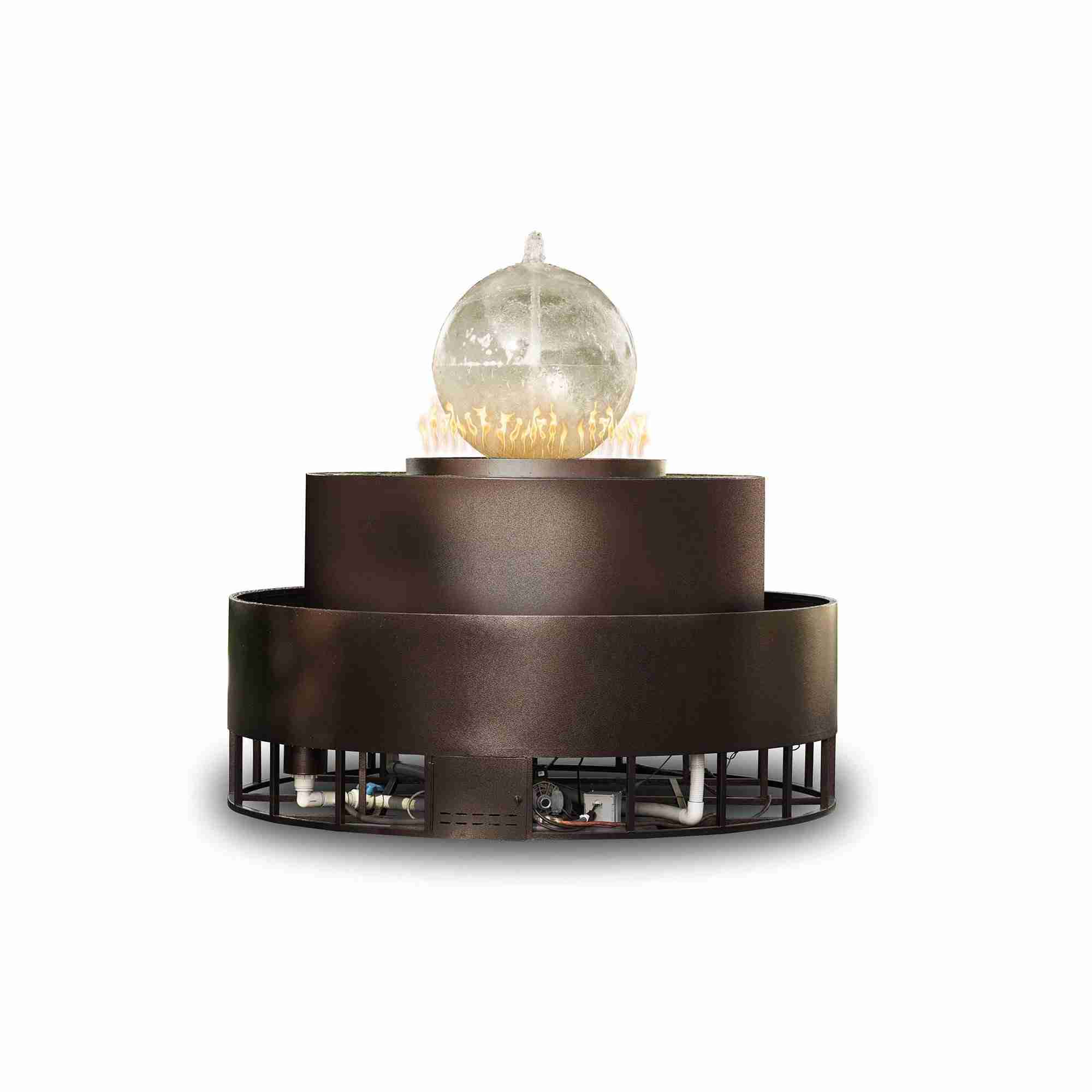
How complex the installation is depends largely on which type of unit you choose and which fuel source you’re using. Self-contained propane units are the simplest. You position the unit on a level, non-combustible surface, fill the water reservoir, connect a propane tank, and you’re essentially ready to go. The water pump plugs into a standard outdoor outlet, and the propane tank attaches with a standard regulator and hose.
Natural gas installations are more involved. A licensed gas technician will need to run a gas line from your home’s supply to the feature location, install a shutoff valve, and connect the line to the burner. This is not a DIY project. Gas line work requires permits in most jurisdictions and must be done to code. The cost of running the gas line varies depending on distance and complexity, but it’s typically between $500 and $1,500 on top of the cost of the feature itself.
Fire and water bowls that are designed to mount on a wall, column, or pool edge (rather than sitting on a self-contained base) require additional planning. The water supply needs to be plumbed to the bowl, the gas line needs to reach the mounting location, and the structure supporting the bowl needs to handle the weight of the unit when filled with water. For these types of installations, working with a contractor or landscape professional who has experience with fire features is the safest and most efficient approach.
The Nighttime Factor: Why These Features Shine After Dark
This is where fire and water fountains really earn their keep. During the day, they’re attractive. After dark, they’re stunning. The combination of open flame reflecting off moving water creates a visual effect that artificial lighting simply cannot replicate. The warm glow of the fire illuminates the water as it spills over the edge of the bowl, and the reflections ripple outward across the surface. Add some ambient landscape lighting around the feature and you’ve got an outdoor space that feels completely different at night than it does during the day.
For homeowners who entertain regularly, a fire and water feature becomes the natural gathering point. People gravitate toward the warmth and the visual interest, the same way they gather around a campfire. The difference is that a fire fountain also brings the calming sound of water into the mix — something that softens conversations and makes the space feel more intimate. If you’re designing an outdoor living area around dining, lounging, or hosting, positioning a fire fountain where guests will naturally see and hear it is one of the highest-impact design moves you can make.
Maintenance: Keeping Your Fire Fountain in Good Shape
Compared to a full pond or a complex water garden, fire and water fountains are relatively low-maintenance. But “low” doesn’t mean “zero.” There are two systems to look after, and each has its own upkeep needs.
On the water side, the routine is similar to any recirculating fountain. Keep the basin topped off as water evaporates, especially during hot weather. Clean the pump intake periodically to remove debris. If algae starts forming in the basin, a small amount of fountain-safe algaecide or a few drops of bleach will keep it in check. Draining and cleaning the basin once or twice per season is usually sufficient to keep the water side running smoothly.
On the fire side, the main maintenance task is keeping the burner ports clear. Debris, dust, and water mineral deposits can accumulate on the burner over time, especially if the unit sits uncovered when not in use. A soft brush and a quick wipe-down every few weeks during active use will prevent buildup. If you’re using fire glass as your burning media, check it periodically for discoloration or soot. Lava rock tends to be more forgiving but should be replaced every year or two as it breaks down. Covering the feature when it’s not in use extends the life of both the burner components and the bowl finish.
What to Expect on Pricing
Fire and water fountains span a wide price range depending on size, material, and configuration. Entry-level self-contained GFRC units with a propane connection start in the $1,500 to $2,500 range. Mid-range options with electronic ignition, natural gas hookup, and larger bowl diameters typically fall between $3,000 and $6,000. Premium copper fire and water bowls from manufacturers like The Outdoor Plus and HPC can run $5,000 to $10,000 or more depending on size and finish.
On top of the feature itself, budget for installation costs. A straightforward propane setup might add only a few hundred dollars for a level pad and an outdoor outlet. A natural gas installation with a new gas line, permits, and professional hookup can add $1,000 to $2,000. If the feature is being integrated into a pool surround or a custom hardscape, the total installed cost will be higher, but so will the impact. These are investment-level features, and the pricing reflects that.
Is a Fire and Water Fountain Right for Your Space?
A fire fountain isn’t for every yard or every homeowner, and that’s fine. They work best in spaces where you spend time after dark, where you entertain guests, or where you want a single feature that delivers both visual drama and a relaxing atmosphere. They’re ideal for patios, pool decks, contemporary outdoor living areas, and courtyards where the feature will be seen and heard regularly.
If you’re not sure whether a fire and water feature is the right fit, or you want help figuring out which size, material, and fuel configuration makes sense for your setup, we’re happy to talk it through. Water Feature Pros has been helping homeowners choose the right features for over 27 years. Give us a call at (941) 256-0152 or send us some photos of your space and we’ll help you figure out the best option.