

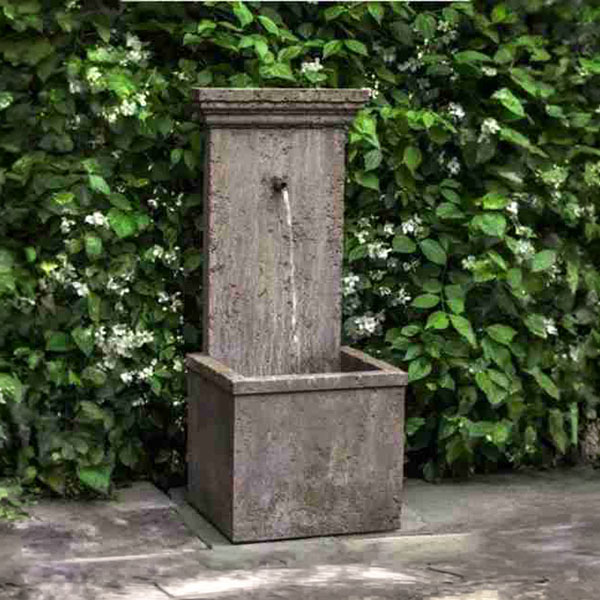
What Makes an Outdoor Wall Fountain Worth the Investment
A wall water fountain does something no other water feature can. It takes a blank vertical surface and turns it into a living, moving piece of your landscape. Instead of claiming valuable patio or garden floor space the way a tiered fountain or birdbath does, a wall fountain works with the architecture you already have. That vertical footprint is a genuine advantage for homeowners working with narrow side yards, compact courtyards, or smaller patios—spaces where every square foot counts. And because the water travels down a flat or sculpted surface rather than dropping from a high tier, the sound you get is a steady, calming cascade that softens background noise without overwhelming a conversation. It’s the kind of water feature that makes you want to sit outside longer.
Wall fountains have been part of designed gardens for centuries. You’ll find them in the courtyards of old European estates, in Mediterranean piazzas, and built into the stone walls of formal English gardens. They’ve lasted this long because they work. They’re visually striking, they attract birds and wildlife, and they create a sense of calm that’s hard to replicate with any other landscape element. The real question for most homeowners isn’t whether a wall fountain is a good idea. It’s how to choose the right outdoor wall fountain for your home, which means understanding the differences in construction, materials, sizing, and installation before you spend a dollar. That’s what we’re going to walk through here, based on what we’ve learned from 27 years of selling and installing water features for over 20,000 customers.
Wall-Mounted vs. Freestanding Wall Fountains: Know the Difference
Before you start browsing, it’s worth understanding that not every wall fountain actually mounts to a wall. There are two distinct categories, and the one you choose affects everything from where you can place the fountain to how much installation work is involved. Getting this right up front saves you from ordering something that doesn’t fit your situation.
Wall-Mounted Fountains
These attach directly to an existing wall or fence using brackets, lag bolts, or built-in mounting hardware. Water flows from a spout or spillway near the top of the unit and cascades down a decorative face into a basin at the bottom. The entire fountain hangs off the wall, which means nothing sits on the ground except possibly a catch basin if the design calls for one. Wall-mounted designs are ideal when you want the fountain tight against a structure and completely out of the way of foot traffic. They work especially well on patios bordered by a stucco or masonry wall, inside courtyards where ground space is used for seating or planters, and along exterior house walls near entryways where you want to greet visitors with the sound of moving water.
The trade-off with wall-mounted fountains is structural. Your wall needs to handle the weight, and that weight adds up faster than most people expect. A small resin fountain might only weigh 20 to 30 pounds, but a large cast stone piece can easily exceed 150 pounds before you even add water to the basin. You’ll want to mount into studs, masonry anchors, or a reinforced surface. Drywall alone won’t hold up, and wood fences need to be in solid structural condition with posts that aren’t rotting or leaning. If you’re unsure whether your wall can handle a specific fountain, that’s something we can help you figure out before you order.
Freestanding Wall-Style Fountains
Freestanding wall-style fountains sit on the ground and lean against or stand near a wall. They have a flat back panel that gives them the same visual effect as a mounted fountain, but they don’t need to be bolted to anything. Their weight rests on the ground, which means placement is as simple as choosing a level spot on your patio, driveway border, or garden path. These are heavier and more stable on their own, and that stability is actually a selling point in areas with high winds or in homes with older exterior walls that weren’t built to support additional load. If you rent your home, live in a condo with shared exterior walls, or simply don’t want to drill into your house, a freestanding wall-style fountain gives you the same aesthetic with none of the mounting complexity. Browse our full selection of outdoor wall fountains to see both mounted and freestanding styles side by side.
Popular Materials for Outdoor Wall Fountains
The material your fountain is made from affects nearly everything about the ownership experience. It determines how much the fountain weighs, how it looks on day one, how it ages over the years, how much maintenance it needs, and what it costs. Choosing the right material for your climate and setting is one of the most important decisions you’ll make, so it’s worth understanding your options in detail.
Cast Stone
Cast stone is one of the most popular choices for outdoor wall fountains, and after decades of selling them, we understand why. Cast stone is made from a concrete andite blend that’s poured into detailed molds, which allows manufacturers to create incredibly intricate designs, from lion heads to scrollwork to smooth contemporary panels, at a fraction of the cost of carving the same design out of natural stone. The finished product is heavy, weather-resistant, and develops a beautiful patina over time as mineral deposits and natural aging give the surface more character. Cast stone handles sun, rain, and freezing temperatures well when you follow basic seasonal care, and it doesn’t fade or become brittle the way lighter materials can. Most of the cast stone wall fountains we carry weigh between 50 and 200 pounds depending on size and design. That weight is actually a benefit outdoors because it keeps the fountain stable on a patio or against a wall, even in strong wind. If you’re drawn to the look of aged European stone but don’t want to pay natural stone prices, our cast stone garden fountains are worth a close look.
Fiberglass and Resin
Fiberglass and polyresin fountains are the lightweight, budget-friendly option in the wall fountain world. A design that would weigh 150 pounds in cast stone might weigh 25 pounds in fiberglass, which makes mounting significantly easier and opens up installation possibilities on surfaces that can’t support heavy loads. The price point is also lower, often by 40 to 60 percent compared to cast stone equivalents of similar size. The downside is longevity. UV exposure breaks down fiberglass and resin over time, causing finishes to fade, colors to dull, and the material itself to become brittle and prone to cracking. In windy areas, lightweight fountains that aren’t anchored properly can shift, tip, or even blow off a wall. If you’re placing a fiberglass fountain on a covered patio where it won’t take direct sun all day, you can get several good years out of it. For a fully exposed outdoor wall that bakes in afternoon sun, cast stone or natural stone will serve you much better over the long haul.
Copper and Metal
Copper wall fountains develop a natural green patina over time that many homeowners find more attractive than the original finish. That patina isn’t just cosmetic. It’s a layer of oxidation that actually protects the metal underneath from further corrosion, which means copper fountains can last for decades with very little maintenance. Stainless steel is another metal option, offering a sleek, reflective surface that pairs well with modern architecture and minimalist landscape designs. One thing to keep in mind with metal fountains is the sound profile. Water hitting metal creates a sharper, brighter tone than water flowing over stone. Some people love that crisp sound; others prefer the softer, more muffled cascade that stone provides. It’s a personal preference, but it’s worth thinking about before you buy.
Natural Stone
Granite, slate, and marble wall fountains represent the premium tier. Each piece has natural color variation, veining, and texture that makes it genuinely one of a kind. Natural stone is extremely durable and can handle harsh weather conditions without fading, cracking, or losing its character. Granite in particular holds up exceptionally well in freezing climates. The trade-off is weight and cost. Natural stone fountains are heavy, often requiring professional installation, and the price reflects both the raw material and the craftsmanship involved in shaping it. If your budget allows and you want a fountain that will last for generations and become more beautiful as it ages, natural stone is the best material you can choose.
Choosing the Right Size for Your Space
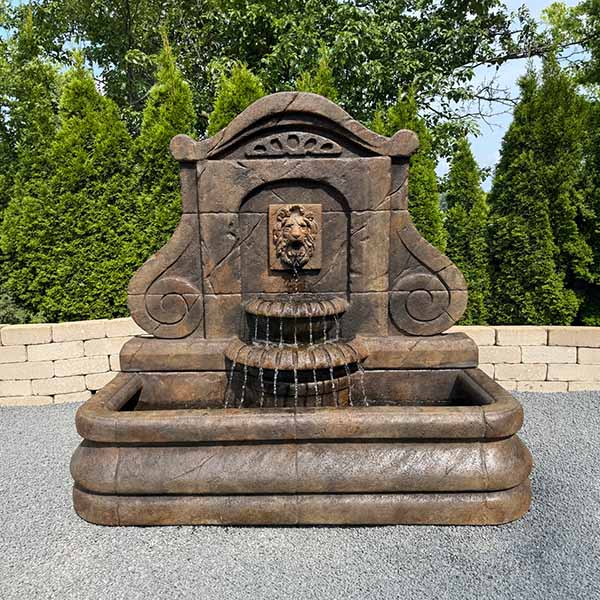
One of the most common mistakes we see is choosing a wall fountain that’s too small for the wall it’s displayed on. A 24-inch fountain centered on a 10-foot wall looks like an afterthought, not a focal point. On the other hand, an oversized fountain crammed onto a narrow patio wall can feel cramped and out of proportion. The goal is to choose a size that gives the fountain enough presence to be a real design element without overwhelming the surrounding space. As a starting point, the fountain should take up roughly one-third to one-half of the wall’s width, with at least 12 to 18 inches of visual breathing room on each side.
For walls under 6 feet tall, a fountain between 24 and 36 inches high works well and gives you presence without domination. For walls between 6 and 8 feet tall, the 36- to 48-inch range is the sweet spot for most patio and courtyard installations. For large exterior walls or commercial spaces, fountains 48 inches and taller create the kind of visual impact that anchors an entire outdoor area. Large outdoor wall water fountain designs in that upper range often become the centerpiece of a garden, entryway, or dining patio. If you’re unsure about scale, snap a photo of your wall and give us a call. We do this every day and can help you narrow down the right size before you commit to an order.
Wall Fountain Styles: From Classical to Contemporary
Your outdoor wall fountain should feel like it belongs with the rest of your home and landscape, not like something that was dropped in from a different era or design language. The good news is that wall fountains come in a genuinely wide range of styles, so finding a match isn’t difficult once you know what to look for.
Classical and Traditional
Lion-head wall fountains are among the most iconic and recognizable designs in this category. A sculpted lion head mounted on a decorative back plate spills water from its mouth into a scalloped or rectangular basin below. The look traces back to Roman public fountains, where lion heads were a symbol of strength and the sound of water signaled a gathering place—a tradition that still resonates today. You’ll also find classical wall fountains featuring scrollwork, fleur-de-lis patterns, shell motifs, cherub figures, and Greco-Roman column details. These styles pair naturally with Mediterranean, Tuscan, Spanish Colonial, and traditional home exteriors. If your home has stucco walls, arched doorways, terra cotta accents, or wrought iron details, a classical wall fountain will feel right at home.
Modern and Minimalist
Modern wall fountain designs for patios lean toward clean geometry and smooth surfaces. Think flat rectangular panels with a single unbroken sheet of water flowing down the face, or stacked horizontal basins with a narrow cascade between each tier. Materials like brushed stainless steel, polished dark stone, and matte-finished resin dominate this category. The emphasis is on the water itself rather than ornamental sculpture, and the result is a sleek, calming focal point that suits contemporary homes, modern courtyards, minimalist gardens, and commercial spaces like restaurants and spas. If your outdoor area features concrete pavers, clean-lined furniture, and neutral tones, a modern wall fountain will integrate without competing for attention.
Natural and Rustic
If you want your fountain to look like it grew out of the landscape rather than being installed last weekend, natural-style wall fountains use rough-cut stone textures, stacked rock faces, and earth-toned finishes to blend with gardens, woodland settings, and naturalistic landscapes. These designs often mimic the look of water seeping through a rock formation or cascading over a cliff face, which makes them especially effective when surrounded by plantings, moss, and trailing vines. Our rock wall panels are a popular option for homeowners who want that organic, natural stone appearance without the extreme weight and expense of quarried rock.
Installation: What You Need to Know Before You Mount

Installing an outdoor wall fountain is more straightforward than most people expect, but there are a few practical details to plan for ahead of time. Addressing these before your fountain arrives means you won’t be scrambling for solutions on installation day.
Power Supply
Nearly all wall fountains run on a small submersible pump that recirculates water from the basin up through tubing to the top of the fountain face. That pump needs electricity, which means you’ll need access to a GFCI-protected outdoor outlet within reach of the fountain’s power cord. Most cords run 6 to 10 feet in length. If you don’t have an outdoor outlet nearby, hiring an electrician to install one is a worthwhile investment. This is one area where cutting corners creates real problems. Running extension cords across a patio or through a window is a safety hazard and isn’t suitable for a permanent installation. Solar-powered wall fountains are available and they’ve improved in recent years, but they still depend on consistent direct sunlight to maintain a steady water flow. In shaded courtyards, on north-facing walls, or in climates with long cloudy stretches, a solar pump may not deliver the performance you’re hoping for.
Wall Strength and Mounting
For wall-mounted fountains, the surface you’re attaching to needs to support the fountain’s dry weight plus the weight of water sitting in the basin. A cast stone fountain with a full basin can easily weigh 200 pounds or more, so this isn’t something to take lightly. Mount into wall studs, concrete, brick, or stone using heavy-duty anchors and lag bolts rated for the load. Standard drywall anchors won’t hold, and hollow-core fencing isn’t strong enough for anything heavier than a small resin piece. If you’re mounting to a wood fence, check that the posts are solid, plumb, and not showing signs of rot. As Gardening Know How explains in their overview of wall fountain construction, hiding the pump tubing and power cord behind the wall or within the mounting structure gives you the cleanest finished look and protects the components from UV damage and accidental snags.
Water Supply and Drainage
Wall fountains are closed-loop recirculating systems, which is one of the things that makes them so practical. The pump pulls water from the basin, pushes it up through tubing to the top of the fountain, and the water flows back down the face and into the basin again. You don’t need a dedicated plumbing line or a connection to your home’s water supply. You fill the basin with a garden hose and then top it off periodically as water evaporates. How often you need to refill depends on your climate, sun exposure, and the size of the basin. In hot, dry climates you may need to add water every few days. In cooler or more humid areas, once a week is usually enough. Most outdoor fountains have very little impact on your water bill because the same water circulates over and over until it naturally evaporates. Drainage is only a real concern if the fountain overflows during heavy rain or if the basin gets overfilled. Position your fountain where any overflow won’t pool against your home’s foundation, and keep the basin level so water distributes evenly across the fountain face.
Indoor vs. Outdoor Wall Fountain Considerations
Wall fountains work beautifully in both settings, but the requirements are different enough that it’s worth thinking through before you buy. Outdoor wall fountains need materials that can handle UV exposure, temperature swings, rain, wind, and in some regions, freezing and thawing cycles. Cast stone, natural granite, and marine-grade metals are built for this. Indoor wall fountains operate in a controlled environment, which opens up material options that wouldn’t survive outside. Glass panels, polished copper, lightweight resin with detailed finishes, and even mirror-backed water walls are all fair game indoors because they’re never exposed to weather.
Sound is another important difference. Outdoors, ambient noise from traffic, wind, neighbors, and lawn equipment means your fountain needs to produce enough volume to actually be heard and appreciated. Larger basins, textured fountain faces, and higher flow rates all contribute to more sound output. Indoors, the opposite is usually true. A softer, gentler flow adds ambiance to a living room, office lobby, or entryway without overwhelming conversation or competing with background music. If you’re leaning toward an indoor installation, our indoor wall fountain collection includes options specifically designed for interior spaces with quieter pumps, drip-free basins, and finishes that complement indoor decor.
Weatherproofing and Winter Care
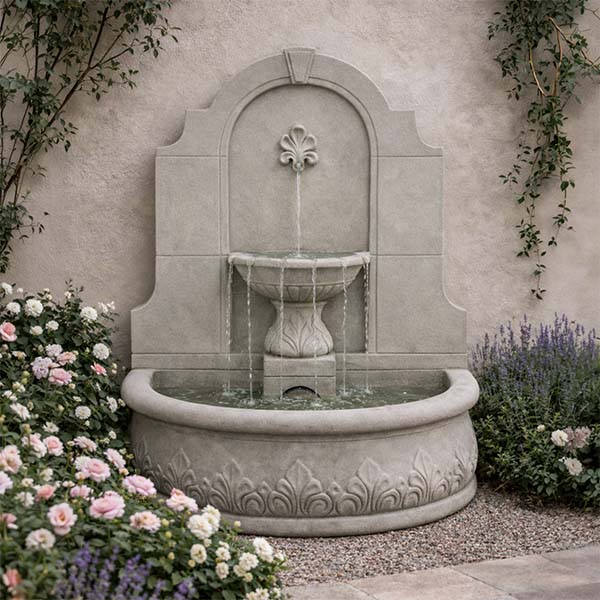
If you live somewhere with freezing winters, preparing your outdoor wall fountain before the first hard frost is one of the most important things you can do to protect your investment. Water that freezes inside a basin, pump housing, or tubing line expands as it turns to ice, and that expansion is enough to crack cast stone, split rubber seals, shatter fiberglass, and destroy pump impellers. The repair costs from a single freeze event can easily exceed the cost of a new pump, and in some cases the fountain itself can be permanently damaged. The good news is that winterizing is simple and takes less than an hour.
Start by draining all the water from the basin, the pump, and the tubing. Disconnect the pump and bring it indoors for storage. We recommend storing pumps in a bucket of clean water over the winter to keep the internal seals from drying out and cracking, which extends the pump’s lifespan significantly. Clean the fountain thoroughly while it’s empty, removing algae buildup, mineral deposits, and any debris that’s collected in the basin or along the fountain face. Once it’s dry, cover the fountain with a breathable, weather-resistant cover. Avoid plastic tarps, which trap moisture underneath and promote mold growth. For wall-mounted fountains that can’t easily be removed, make sure the basin is completely dry and consider placing an absorbent cloth inside to wick away any moisture from rain or snowmelt. In milder climates like Florida and the Gulf Coast, you can usually run your fountain year-round. Just keep an eye on the water level during dry stretches and clean the pump filter monthly to prevent clogs from leaves and dust.
Sound: What to Expect from a Wall Water Fountain
The sound of moving water is one of the primary reasons people invest in a wall fountain, and it’s worth understanding what kind of sound you’re actually going to get. Wall fountains generally produce a softer, more contained sound than freestanding tiered fountains or large pond waterfalls. The water travels a shorter vertical distance and often flows over a flat or textured surface rather than dropping freely from height into a deep basin. The result is a gentle, steady cascade rather than an aggressive splash. For many homeowners, that’s exactly the right level of sound. It’s enough to mask the hum of an air conditioning unit, soften street noise, and create a relaxing background without drowning out a conversation on the patio.
If you want more volume from your wall fountain, there are a few design factors that increase sound output. A higher mounting point means the water falls farther, which creates more impact noise when it hits the basin. A textured fountain face with ridges, ledges, or protruding details breaks the water into smaller streams and droplets, which adds complexity and richness to the sound. And an adjustable-speed pump lets you dial the flow rate up or down depending on the mood you want to set. The Family Handyman recommends spending time listening to fountains before making a purchase, since the experience of sound is highly personal and what’s soothing to one person can feel repetitive or intrusive to another. If you can’t audition a fountain in person, pay attention to the flow rate listed in the product specs and look for video or audio clips from the manufacturer.
Pricing: What Wall Fountains Cost by Size and Material
Wall fountain pricing covers a wide range, and understanding what drives the cost helps you set a realistic budget and avoid overpaying for features you don’t need. Small wall fountains under 30 inches in resin or fiberglass typically start around $150 to $350. These are solid entry points for covered patios, apartment balconies, or homeowners who want to try a wall fountain before committing to a larger piece. Mid-size fountains in the 30- to 48-inch range, made from cast stone or higher-quality fiberglass, generally run $400 to $1,200. This is where most homeowners land, and it’s the range that offers the best balance of durability, design detail, and long-term value. Large wall fountains over 48 inches in cast stone or natural stone can range from $1,200 to $3,000 or more depending on the manufacturer, material, and level of sculptural detail. Custom and architectural-grade installations for estates or commercial properties can go higher still.
One thing that catches some first-time buyers off guard is that most outdoor wall fountains ship with the submersible pump already included in the price, so you’re not paying extra for the mechanical components. Shipping costs can vary depending on weight and distance, and heavier cast stone fountains may require freight delivery. We offer free shipping on most of our fountains nationwide, and our team can walk you through what to expect on the delivery and logistics side so there aren’t any surprises. Wayfair’s outdoor fountain guide is a helpful general reference if you want to compare pricing benchmarks across different material categories.
How to Choose the Right Outdoor Wall Fountain for Your Home
Picking the right fountain comes down to matching the product to your space, your personal style, and your practical reality. Start with your wall. Measure the height and width of the surface where you want the fountain to go. Note what the wall is made of and whether you can drill into it for mounting. If mounting isn’t practical or allowed, a freestanding wall-style design gives you the same visual impact with zero attachment requirements. Think about how the fountain will look from different angles, including from inside the house through a window, since that’s often where you’ll appreciate it most during colder months.
Next, choose your material based on exposure and climate. For fully exposed outdoor installations that see direct sun, rain, and freezing temperatures, cast stone and natural stone are the most durable long-term choices. For covered patios and sheltered courtyards, fiberglass and resin offer lighter weight and lower cost without the same durability concerns. Metal fountains split the difference nicely and work well in both modern and traditional settings. Then match the fountain’s style to your home’s architecture and landscape. A classical lion-head fountain looks natural against a stucco Mediterranean wall. A flat-panel cascade fits a modern concrete patio. A stacked-stone piece disappears into a garden setting surrounded by ferns and ground cover.
Finally, think honestly about maintenance. Every fountain needs periodic cleaning, water top-offs, and seasonal winterizing in cold climates. Larger fountains with bigger basins need less frequent refilling because they hold more water. Simpler designs with smooth surfaces and fewer crevices are easier to scrub clean. If you want something truly low-effort, look for a mid-size cast stone fountain with a generous basin and a pump that’s easy to access for cleaning. If you’re still narrowing it down, we’re here to help. We’ve spent over 27 years helping homeowners pick the right water feature for their space, and a quick phone call can save you hours of second-guessing. Reach out through our contact page or call us directly at (941) 256-0152.