


Lake & pond resource center
Lake and Pond Management: Water Quality, Fountains and Lake Services
Your resource for water quality, aeration and decorative fountains, and lake and pond services for HOAs, property managers and lakefront owners, in Florida and nationwide.
- Veteran ownedAnd operated
- 29 yearsIn the fountain business
- Rated 4.9Stars from Google reviews
- Kasco and EasyProAuthorized distributor
Start here
What are you looking for?
Pick the topic in front of you. Each one opens its own page, with the equipment and products for that topic.
 Algae Control & Water ClarityGreen water, algae blooms and murky water. Start with nutrients, oxygen, pH and clarity.Learn more
 Fountains & Aeration EquipmentDisplay fountains, aerating fountains, surface aerators, circulators, bottom diffused aeration and de-icers.Learn more
 Aquatic Plants & WeedsIdentify the plant before you choose a control. Some plants help the lake; too much growth hurts it.Learn more
 Watershed & Shoreline CareManage runoff, erosion and the planted buffer that keeps extra sediment and nutrients out.Learn more
 Fish & WildlifeKeep oxygen up and habitat healthy and, where fishing is a goal, the right stocking and harvest.Learn more
 Lake Structure & UseInspect banks, outfalls and water sources, and plan for how the lake is used.Learn more
Not sure where to start? Call (941) 256-0152 or get a quote, and we will help you narrow it down.
Built on Florida guidance. Our advice follows the Florida Department of Environmental Protection (FDEP) on water quality and stormwater, the Florida Fish and Wildlife Conservation Commission (FWC) on aquatic plants, fish and wildlife, and UF/IFAS research. See the guidelines we follow
Lake and pond basics
Two short videos on lake and pond management
These university extension videos cover the basics of a healthy lake or pond. They are a good starting point before you choose equipment or service.

Algae control & water clarity
Algae control and water clarity: start with what is in the water
Green water and algae are the most common lake complaints. Algae grow on nutrients and sunlight, so clear water starts with what is in the lake: nutrients, dissolved oxygen, pH, clarity and temperature. FWC says poor water quality is the most common cause of poor pond production, and dense algal blooms can use up oxygen when sunlight is limited (FWC).
- Test before you treat. FWC gives an ideal pH range of 6.0 to 8.0 for Florida ponds (FWC).
- Cut the nutrients that feed algae: fertilizer, grass clippings and runoff. Watershed and shoreline care
- Add oxygen and movement with aeration. It helps, but it does not cure algae on its own. Fountain or aerator?
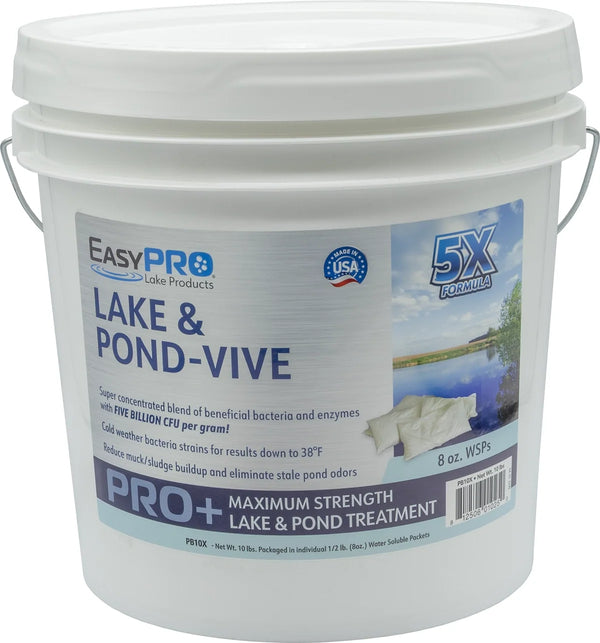
- Use dye and beneficial bacteria to support clarity.
Watch
How an aerating fountain adds movement and oxygen at the surface, and where it helps with algae growth.
Ready to talk about your lake?
Call us or get a quote. We will help you decide what to do first.
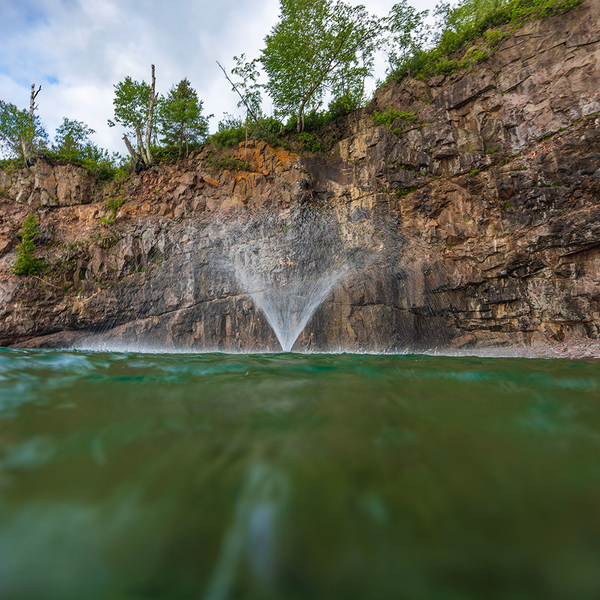 Kasco 1 HP 4400VFX 1 HP Aeration Fountain$2,240.00View details
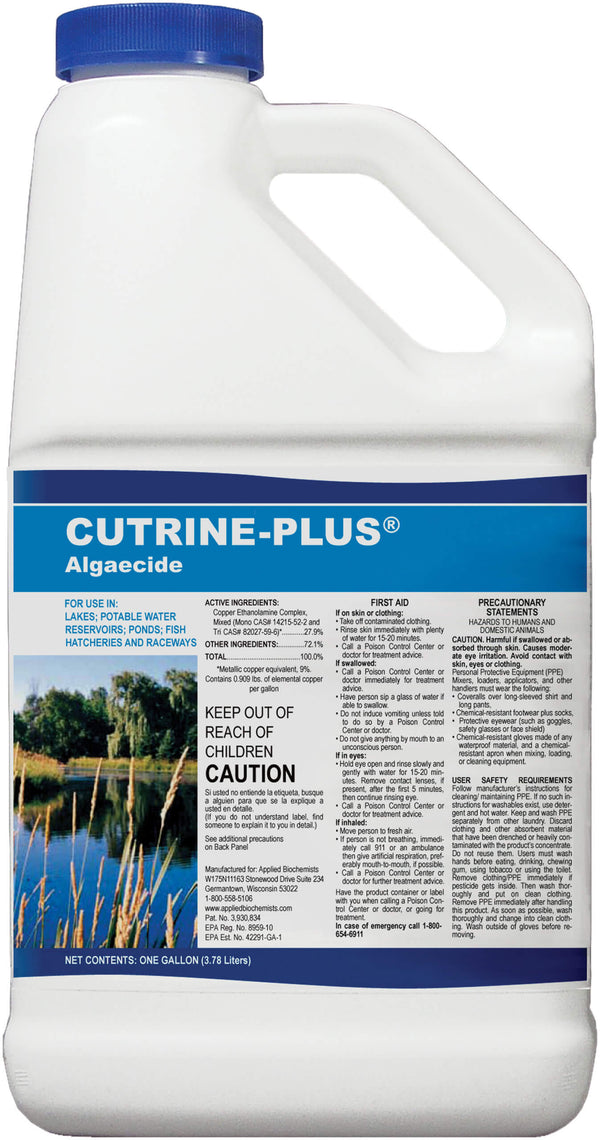 Cutrine Plus Algaecide (liquid or granular)$64.56View details
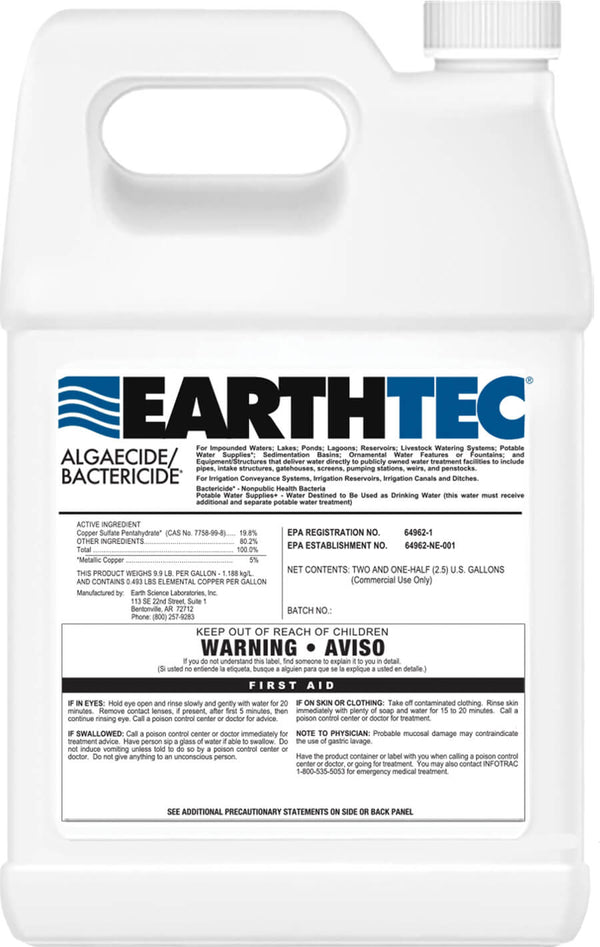 EarthTec Liquid Algaecide, 1 gallon$62.51View details
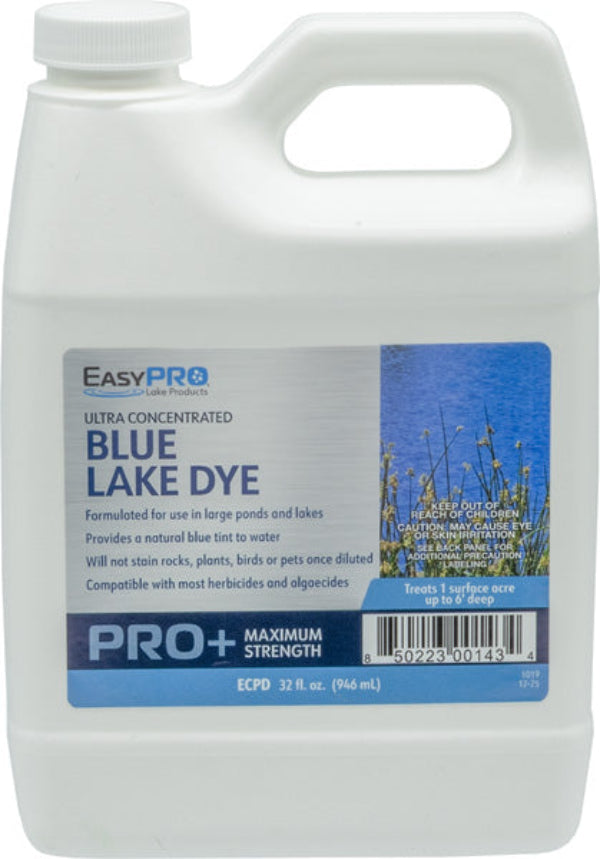 EasyPro Concentrated Lake Dye (blue, serenity or black)$35.86View details
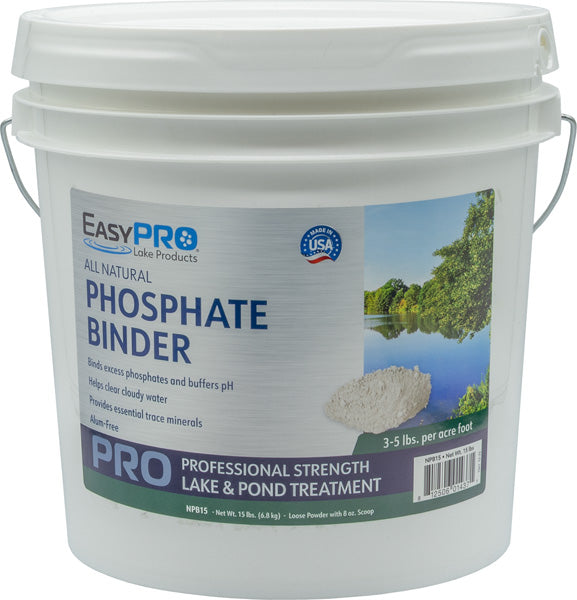 EasyPro Natural Phosphate Binder (15 or 45 lb)$115.81View details
Read more about algae control and water clarity
What each measure tells you
Dissolved oxygen keeps fish alive and helps break down organic matter. It is lowest near dawn. Nutrients, mainly nitrogen and phosphorus, decide how much algae a pond can grow (FWC). pH outside 6.0 to 8.0 is a sign something is off. Clarity tells you how much algae or sediment is in the water. Warm water holds less oxygen, so summer is when lakes and ponds are most at risk.

Why algae keep coming back
Algaecides kill what is there, but the dead algae sink, break down and release nutrients back into the water. Treat in sections, never the whole lake at once, so the dying algae do not pull the oxygen down (EasyPro). Long term, cutting nutrients matters most.

Fountains & aeration equipment
Lake fountains and aeration equipment: the right unit for the job
A display fountain, an aerating fountain, a surface aerator, a circulator and a bottom diffuser all move water, but they do different jobs. Depth decides most of it. UF/IFAS says fountains are typically not recommended for aeration in ponds deeper than about eight feet, and bottom diffusers give greater water quality benefits in deeper ponds (UF/IFAS SS695). We carry Kasco and AquaMaster equipment.
- Display fountains (Kasco J Series and AquaMaster) for curb appeal at entrances and clubhouses.
- Aerating fountains (Kasco VFX Series) for a mix of display and oxygen.
- Bottom diffused aeration (Kasco RobustAire) to mix deeper lakes from the bottom up.
- Size it to the lake and the view, and add lights for night.
 Kasco 4400 JF 1 HP Lake Fountain$2,550.00View details
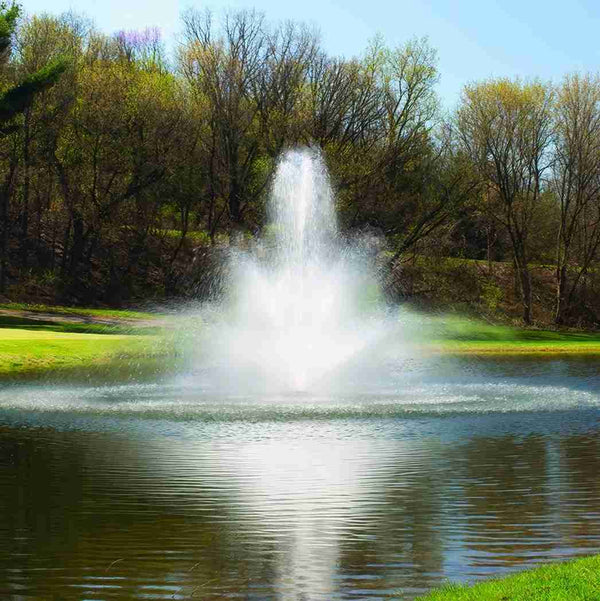 Kasco 8400 2 HP Lake Fountain$6,293.00View details
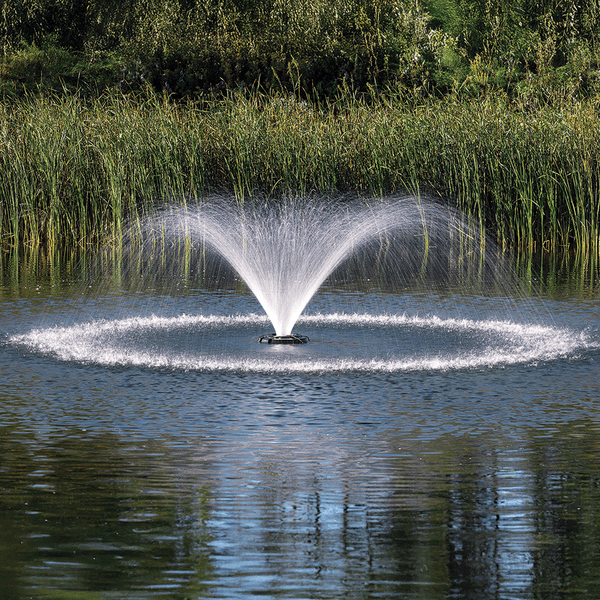 Kasco 2 HP 8400VFX Aeration Fountain$6,633.00View details
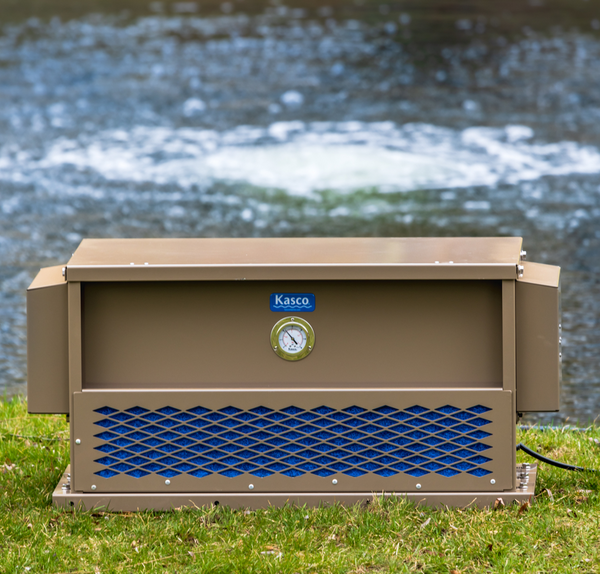 Kasco Robustaire Large System$10,625.00View details
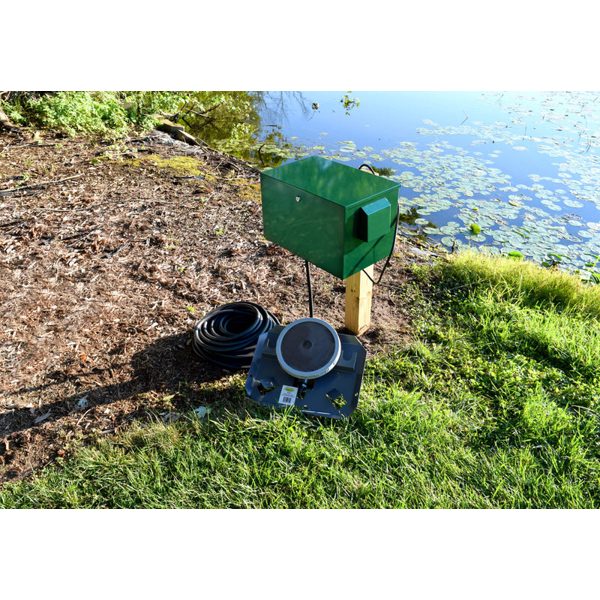 EasyPro Sentinel Deluxe Aeration Systems (lakes and ponds up to 2 acres)From $1,744.54Contact us for shippingAsk about this product

Read more about choosing a fountain or aerator
Fountain or aerator?
UF/IFAS says fountains are typically not recommended for aeration in ponds deeper than about eight feet, and bottom diffusers give greater water quality benefits in deeper ponds (UF/IFAS SS695).
- 1
Floating fountain
Spray display. Some surface oxygen.
- 2
Surface aerator
Low boil. More surface oxygen.
- 3
Bottom diffuser
Mixes the lake from the bottom up.
Start new aeration slowly
UF/IFAS warns that starting aeration in a stratified pond can cause a short-term low-oxygen event and a fish kill. Run fountains for brief periods at first and lower diffusers slowly (UF/IFAS SS695).
How bottom aeration mixes a lake


Buy, install or maintain
Buy the equipment only, have it installed, or add a maintenance program with our licensed lake and pond professionals.
Lake and pond services
One call for all pond service & equipment needs
Contact us for your particular needs. We suggest a comprehensive plan to address all of them. Our team provides pricing for the services and materials & equipment if needed. Then our licensed lake management partners perform any field work necessary to complete the plan, unless you want to perform it yourself.
- 1
You contact us with your questions & needs
Tell us what you see and share a few photos.
- 2
We assess the pond and your goals
Size, depth, power, problems and what the board or owner wants.
- 3
We recommend equipment and service with pricing
Fountain, aeration, lighting, treatments, or a maintenance program.
- 4
Our licensed industry professionals do any field work if needed
Our team of licensed lake & pond professionals is available for site assessments and work. We follow up to ensure positive results.

Where we help
Nationwide support is available through our network of licensed lake & pond industry experts.
Florida service areas
Sarasota, Venice, Bradenton, Tampa, St. Petersburg, Fort Myers, Naples, Orlando, Fort Lauderdale, Miami and Jacksonville
On-site assessments, scheduled maintenance programs, equipment service and repair, and weed and algae control through licensed partners.
Aquatic plants & weeds
Aquatic plants and weeds: identify first, then treat
Identify the plant before you choose a control method. Some vegetation helps a lake: FWC notes aquatic plants reduce erosion and absorb nutrients (FWC). Too much growth can block access, take over open water and affect oxygen. Weeds and algae both grow on nutrients, so treatment alone keeps you on a cycle.
- Treat in sections, not the whole lake at once, so dying algae do not pull the oxygen down (EasyPro).
- Controlling aquatic plants in waters of the state needs an FWC permit unless exempt (FWC).
- Paid herbicide and algaecide work needs a Florida pesticide license (FDACS). Our licensed partners do this work.
- Aeration and nutrient control help prevent regrowth. They do not cure algae on their own.
Watch
How a surface aerator moves water and adds oxygen, and the lake problems it helps with, such as a green surface and low oxygen.
Weed control products
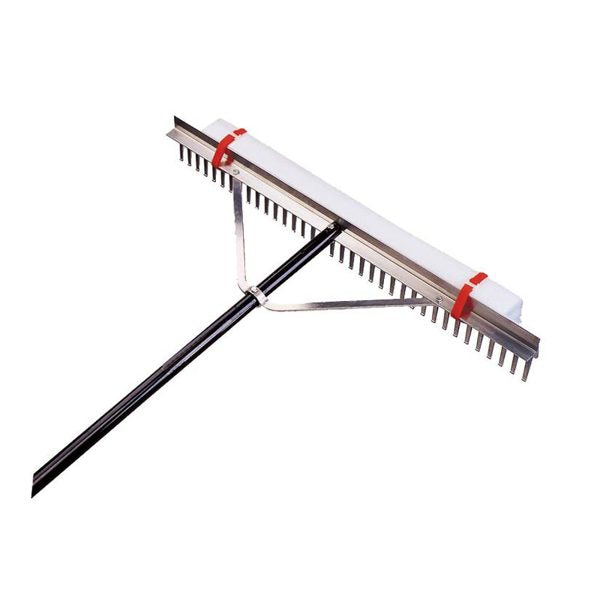 EasyPro Lake and Pond Weed Rakes (32 and 36 inch)From $153.74Contact us for shippingAsk about this product
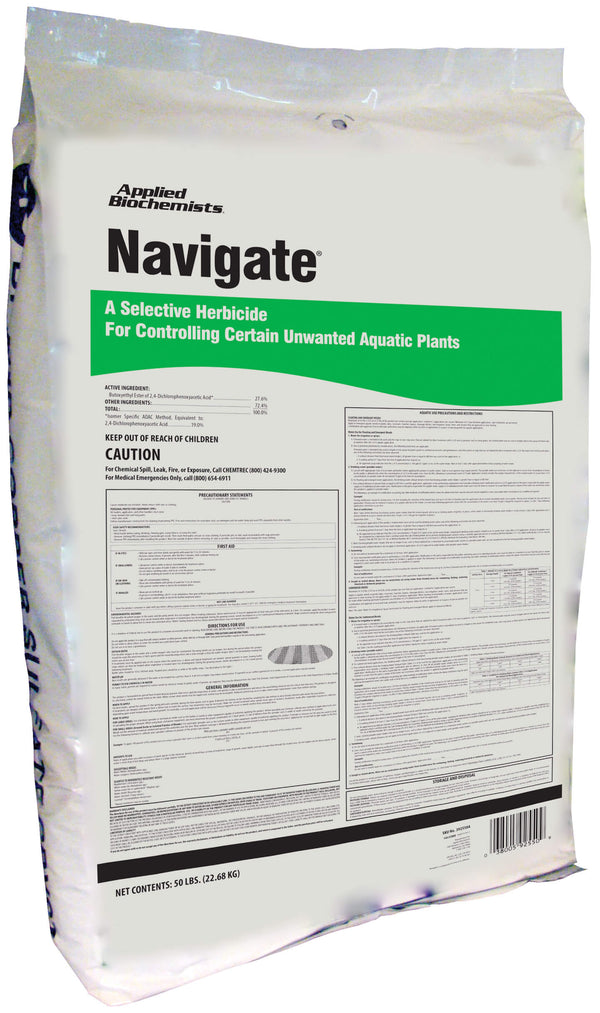 Navigate Granular Aquatic Herbicide, 50 lb bag$368.99View details
 Sonar Aquatic Herbicide (8 oz, pint or quart)$399.74View details
 Hydrothol Granular Herbicide (20 or 40 lb)$143.49View details
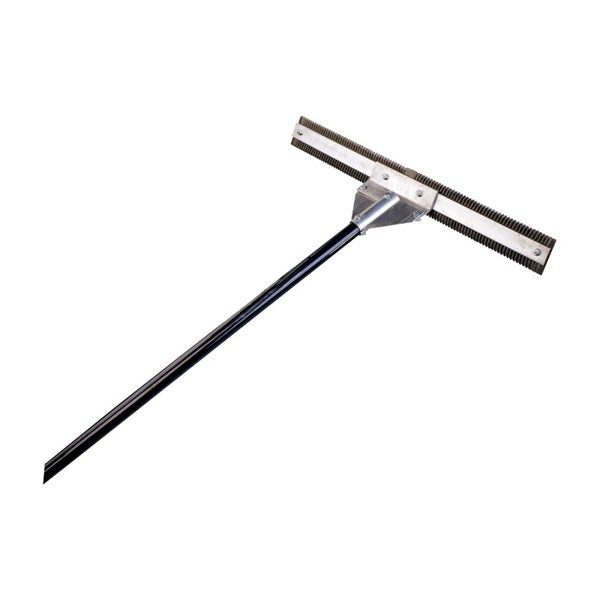 EasyPro 28 inch Aquatic Weed CutterFrom $215.24Contact us for shippingAsk about this product


Read more about aquatic plants and weeds
Green water, mats or weeds?
A green tint in the water is usually planktonic algae. Stringy mats that start in shallow water are filamentous algae. Rooted or floating plants such as hydrilla, duckweed or water hyacinth are weeds, and each one needs a different approach. The full guide will include a photo ID chart.
Permits and licenses
In Florida, controlling or removing aquatic plants in waters of the state needs an FWC permit unless the water body or activity is exempt (FWC). Anyone paid to apply herbicides or algaecides needs an FDACS license (FDACS).
Prevention
Cutting nutrients matters most. Shoreline buffers, fertilizer rules, aeration and dye all help keep growth down between treatments.

Watershed & shoreline care
Watershed and shoreline care: keep runoff and erosion out
Most of what ends up in a lake washes in from around it. Rain carries fertilizer, grass clippings and soil from lawns and streets into the water. Good shoreline care slows that runoff, holds the banks in place and keeps extra nutrients and sediment out. UF/IFAS notes that strongly rooted shoreline plants help prevent erosion by buffering wave action (UF/IFAS).
- Keep fertilizer at least 10 feet from the water. Sarasota County bans nitrogen and phosphorus fertilizer from June 1 through September 30 (Sarasota County).
- Plant a buffer of Florida-friendly plants along the bank (UF/IFAS EP476).
- Watch the banks near fountains. UF/IFAS notes fountains can increase bank erosion (UF/IFAS SS695).
- Keep floating debris away from docks and seawalls with a circulator.
Watch
How to install the Universal Mount for a Kasco AquatiClear circulator.
Read more about watershed and shoreline care
Where the nutrients come from
Fertilizer, grass clippings, leaves and pet waste all wash toward the lake. SJRWMD asks homeowners to keep grass clippings and leaves out of the street so they do not wash into storm drains (SJRWMD). Each county sets its own fertilizer rules, so check yours.
Plants that hold the bank
Shoreline plants filter runoff and help hold the edge in place across different water depths. UF/IFAS publishes a list of Florida-friendly plants for stormwater pond shorelines (UF/IFAS EP476).
When erosion is already there
Bank repair is field work. Our licensed Florida partners can assess erosion and recommend a fix. In a permitted stormwater pond, check your permit and your water management district before you change the shoreline.
Fish & wildlife
Fish and wildlife: habitat, oxygen and balance
A lake that supports fish and wildlife needs oxygen, habitat and balance. Where fishing is a goal, FWC lists largemouth bass, bluegill, redear sunfish and channel catfish as popular stocking choices, and stresses a properly balanced population (FWC). Low dissolved oxygen is a leading cause of fish kills (FWC), so aeration that runs at night protects fish in hot weather.
- Harvest to keep balance. FWC suggests removing 10 pounds of bream for each pound of largemouth bass (FWC).
- Stocking grass carp needs an FWC permit (FWC).
- Report dead or distressed fish to the FWC Fish Kill Hotline at 1-800-636-0511 (FWC).
- For an alligator at least 4 feet long that threatens people, pets or property, call FWC at 866-FWC-GATOR (FWC).
Watch
A lake management company replaced a customer's aerator that was not working with a Kasco RobustAire cabinet. It ran so quietly that the customer did not know it was installed.
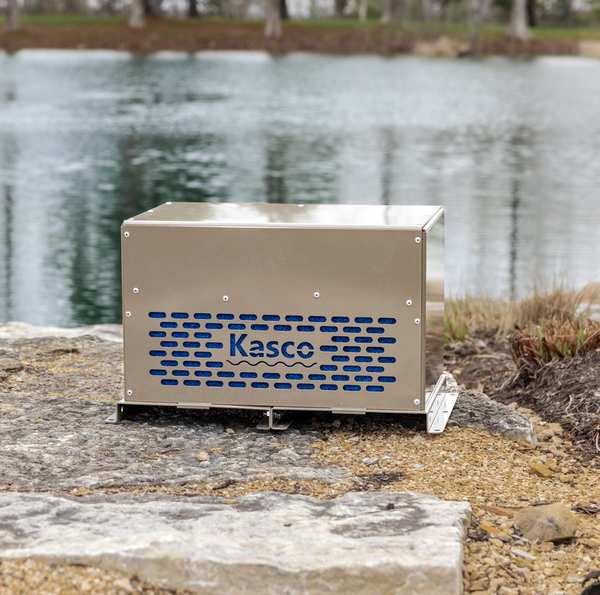 Kasco Robustaire Small System$3,015.00View details
- Kasco Robustaire Large System$10,625.00View details
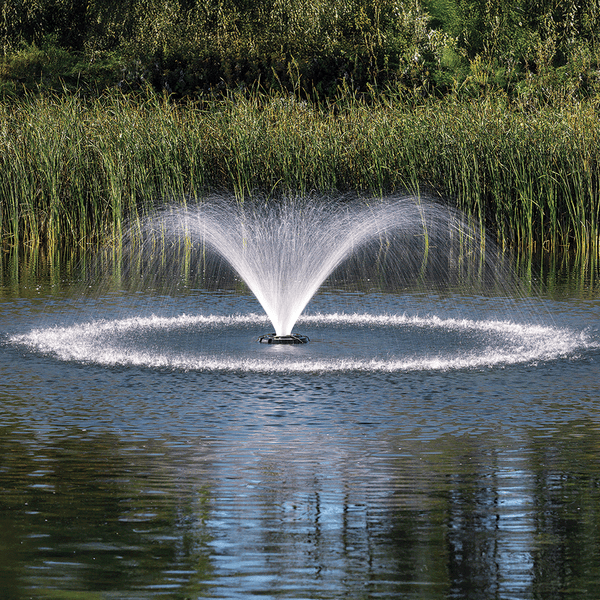 Kasco 5 HP 5.1VFX Aeration Fountain$9,361.00View details
- EasyPro Sentinel Deluxe Aeration Systems (lakes and ponds up to 2 acres)From $1,744.54Contact us for shippingAsk about this product
Read more about fish and wildlife
Warning signs
Fish gulping at the surface early in the morning is a sign of low oxygen. Hot, still weather, several cloudy days, an algae die-off or a strong storm can all drop oxygen fast (FWC).
Habitat
Native shoreline plants give fish cover and food and give birds a place to feed. A shoreline that is mowed to the edge offers little of either.
Living with wildlife
Alligators, wading birds and turtles are part of Florida lakes and ponds. No fountain or aerator keeps alligators away. For a nuisance alligator, call FWC (FWC SNAP).

Lake structure & use
Lake structure and use: inspect it, then plan for how it is used
Every lake is built for a purpose. Many Florida neighborhood lakes and ponds are permitted stormwater systems first. Others are for fishing, irrigation, wildlife or the view from the clubhouse. In most neighborhoods the HOA is responsible for the stormwater system (SJRWMD). Inspect the banks, outfalls, control structures and water sources, and plan equipment around how the lake is used.
- Check control structures and clear debris before hurricane season (SJRWMD).
- Size a display fountain to the lake and the view.
- Add lights for night views.
- Know who to call for permits and reports.
Watch
A Kasco lake specialist explains the difference between a decorative fountain and an aerating fountain, and where each one fits.
Display fountains, aerators and lights are in Fountains & aeration equipment.
Read more about lake structure and use
What to inspect
Walk the lake on a schedule. Look for bank erosion, blocked outfalls and control structures, damaged inflow pipes, and changes in the planted shelf. For fountains and aerators, Kasco lists regular checks such as the zinc anode and GFCI protection (Kasco maintenance). Your stormwater permit sets what must be inspected and reported.
Plan for the use
A lake for fishing needs oxygen and habitat. A lake at the entrance needs a display sized to the view. A lake or pond used for irrigation needs steady water levels. Many lakes do more than one job, so the plan should cover each one.
Why boards trust us
Florida state agency guidelines we follow
We base our advice on guidance from Florida's state agencies and university extension, and we tell you when a job needs a permit or a licensed applicator.
FDEP and FWC
Water quality and stormwater guidance from the Florida Department of Environmental Protection. Aquatic plant, fish and wildlife guidance from the FWC Aquatic Habitat Conservation and Restoration section and FWC pond management.
UF/IFAS and the water districts
Research from UF/IFAS and rules from the water management districts:
Veteran owned
A veteran-owned Florida company, in the fountain business for 29 years.
4.9 stars on Google
Rated 4.9 by our customers. Read our Google reviews.
FAQ
HOA FAQ: questions boards ask us
Do we need a fountain or an aerator?
It depends on the lake depth and your goal. A floating fountain is mostly for looks and adds some surface aeration. Bottom diffused aeration lifts water from the bottom and mixes the whole lake. UF/IFAS says fountains are typically not recommended for aeration in ponds deeper than about eight feet (UF/IFAS SS695). Many HOA lakes and ponds use both. Compare fountains and aerators.
What does a lake fountain cost?
UF/IFAS notes that a fountain can cost hundreds to thousands of dollars before installation and ongoing maintenance (UF/IFAS SS695). Horsepower, spray pattern, lights, cord length and the distance to power all change the price. Send us the lake size and depth and we will recommend a size and give you a quote.
Do we need a permit?
Plant and algae control is where permits usually come in. In Florida, controlling or removing aquatic plants in waters of the state needs an FWC permit unless the water body or activity is exempt (FWC aquatic plant permits). If the pond is part of a permitted stormwater system, read the permit and check with your water management district before you change the pond.
Who is responsible for maintaining a retention pond?
In most neighborhoods, legal responsibility for the stormwater system passes to the homeowners association after construction (SJRWMD). Your permit sets what has to be inspected and maintained.
Will a fountain stop algae?
No. A fountain or aerator can help, but it does not cure algae, and aeration alone does not cure filamentous algae. Algae grow on nutrients, so nutrient control matters most. UF/IFAS also warns that mixing nutrient-rich bottom water into the surface can feed an algal bloom (UF/IFAS SS695). See algae and weed control.
How do we prevent a fish kill?
Most pond fish kills come from low dissolved oxygen, often after hot, still weather, cloudy days, an algae die-off or a summer storm (FWC fish kill causes). Aeration that runs at night, treating algae in sections and cutting nutrients all lower the risk. To report a fish kill, call the FWC Fish Kill Hotline at 1-800-636-0511 (FWC).
Do I need a permit to stock grass carp?
Yes. Only sterile triploid grass carp may be stocked in Florida, and you need an FWC permit (FWC grass carp).
Who does herbicide and algaecide work?
Anyone paid to apply herbicides or algaecides to a lake or pond in Florida needs a pesticide license from the Florida Department of Agriculture and Consumer Services (FDACS). Our licensed Florida lake management partners do this work. We set it up and follow up with you.
What areas do you serve?
We help lake and pond owners in Florida and across the country. Nationwide support is available through our network of licensed lake and pond industry experts. In Florida, we serve Sarasota, Venice, Bradenton, Tampa, St. Petersburg, Fort Myers, Naples, Orlando, Fort Lauderdale, Miami and Jacksonville. Call (941) 256-0152 to talk about your lake.
Can we just buy the equipment?
Yes. You can buy the equipment only, have it installed, or add a maintenance program. Shop lake fountains or call (941) 256-0152 to talk through sizing first.
Last reviewed November 2026. General information, not legal advice. Confirm with your water management district or county.
Lake and pond assessment
Get a quote
Tell us about the lake or pond and what you want from it. Add a few photos if you can. We will help you decide on equipment, service or both.