Lake & pond resource center

Aquatic Plants and Pond Weeds: Identify the Plant, Then Choose the Control

Last reviewed November 2026

The short answer

Identify the plant before you treat it. Some plants help a lake, while invasive plants such as hydrilla and water hyacinth can take over open water (UF/IFAS). Rake or cut small areas. For larger areas, match the herbicide to the plant. In Florida, controlling aquatic plants in waters of the state needs an FWC permit unless exempt, and paid treatment needs a licensed applicator.

Weed control products: what each one does

The right control depends on the plant. Small areas can be raked or cut. Larger areas often need an herbicide matched to the plant, or a licensed treatment. Here is what each option does, with a link to shop each one.

Aquatic herbicides

Navigate, Sonar and Hydrothol each control different weeds. UF/IFAS notes there is no "silver bullet": the right product depends on the weed and where it grows in the water (UF/IFAS). Follow the label.

Best for: weeds that cover too much of the lake.

Shop aquatic herbicides

Surfactants & adjuvants

A surfactant such as Cide-Kick II helps a spray herbicide spread over and stick to the leaves of floating and shoreline weeds. Use one only when the herbicide label calls for it.

Best for: spray treatments on floating and shoreline weeds.

Shop surfactants

Rakes & weed cutters

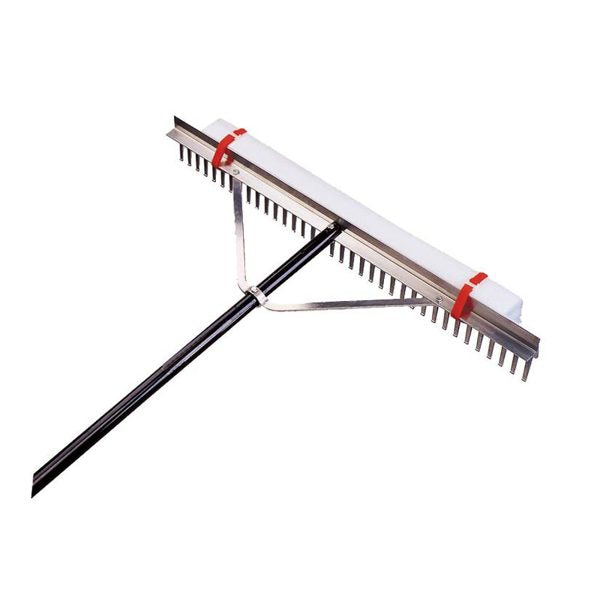
A rake pulls floating and rooted weeds to shore. A weed cutter is thrown out and pulled back to cut rooted weeds below the surface, so you can rake them out. UF/IFAS notes that mechanical removal works well but takes heavy labor (UF/IFAS).

Best for: docks, beaches and small areas.

Ask about rakes & cutters

Lake dye

Dye shades the water and limits the sunlight that submerged weeds and algae need. UF/IFAS lists dye as a way to prevent weeds (UF/IFAS). It needs to be added again over time.

Best for: prevention between treatments, in lakes with little outflow.

Shop lake dye

Nutrient control

Weeds and algae both grow on nutrients. A phosphate binder and beneficial bacteria help reduce the nutrients in the water and in the muck on the bottom.

Best for: lakes where weeds and algae keep coming back.

Shop nutrient control

Licensed weed control

For large areas, invasive plants or any paid treatment, our licensed lake management partners do the work. We set it up and follow up with you.

Best for: HOA lakes, invasive plants and large areas.

Get a weed control quote

Identify the plant first

Each plant needs a different approach, so start with what you see. UF/IFAS notes that many invasive plants in Florida will never be wiped out because they grow too fast, so they must be managed on a regular basis (UF/IFAS). Use this chart as a first check, then send us photos to confirm.

Planktonic algae

Algae

The water looks green, like pea soup, with nothing you can pick up.

First step: Test the water, cut nutrients and treat in sections. Algae control guide

Filamentous algae

Algae

Stringy green mats that start in shallow water and float to the top.

First step: Rake out the mats, then spot-treat and cut nutrients. Algae control guide

Blue-green algae

Report it

A blue-green or bright green scum on the surface. Some blooms make toxins.

First step: Stay out, keep pets out and report it to FDEP at 855-305-3903 (FDEP).

Hydrilla

Invasive

A rooted plant under the water that grows from inches to more than 30 feet deep and forms mats at the surface (UF/IFAS).

First step: Act early. For new hydrilla patches, the goal is to remove them before they spread (UF/IFAS). Ask about licensed treatment.

Water hyacinth & water lettuce

Invasive

Floating plants. Water hyacinth has glossy, rounded leaves and purple flowers. Water lettuce looks like a floating head of light green lettuce. Water hyacinth can double in as little as two weeks (UF/IFAS).

First step: Remove small patches early. Dense mats block light and air and use up oxygen (UF/IFAS).

Duckweed

Common

Tiny, round floating leaves that can cover the whole surface like a green carpet.

First step: Skim or rake small areas, and cut the nutrients that feed it.

Torpedograss

Invasive

A grass that grows from the bank out into water up to about six feet deep (UF/IFAS).

First step: Treat it before it spreads along the shoreline. Ask about licensed treatment.

Native shoreline plants

Helps the lake

Rooted plants along the edge, such as pickerelweed, that hold the bank and take up nutrients.

First step: Keep them. UF/IFAS lists Florida-friendly plants for stormwater pond shorelines (UF/IFAS EP476).

Plant facts from the UF/IFAS Center for Aquatic and Invasive Plants. Send us photos of your lake, and we will help you confirm what is growing.

Plants that help the lake

Not every plant is a weed. FWC notes that aquatic plants reduce erosion and absorb nutrients (FWC). Strongly rooted shoreline plants also buffer wave action and help prevent erosion (UF/IFAS EP476). Plants and algae make oxygen in daylight, too.

The goal is balance, not bare water. Too much growth blocks access and takes over open water. Thick algal mats or water hyacinth can cover the surface and block the sun, so the plants and algae below cannot make oxygen. Weeds can also clog pumps and boat motors (UF/IFAS).

Keep a planted buffer along the bank, and control what spreads into open water.

Permits and licenses in Florida

Before you remove or treat plants, check the rules:

  • FWC permit: controlling or removing aquatic plants in waters of the state needs an FWC permit unless the water body or activity is exempt (FWC).
  • Pesticide license: anyone paid to apply herbicides or algaecides needs a license from FDACS (FDACS).
  • Stormwater permit: if the lake is part of a permitted stormwater system, read the permit and check with your water management district before you change the lake or its shoreline.
  • Grass carp: only sterile triploid grass carp may be stocked in Florida, and you need an FWC permit (FWC).

Our licensed lake management partners handle permitted and licensed work in Florida. Nationwide support is available through our network of licensed lake & pond industry experts.

Remove it or treat it

UF/IFAS describes three ways to control weeds once they are in the lake (UF/IFAS):

  • Mechanical: rakes, cutters and larger equipment. Removal works well, but it takes heavy labor and sometimes special equipment.
  • Chemical: aquatic herbicides. No one product works on every weed. The right one depends on the weed and where it grows in the water, from the surface to the bottom.
  • Biological: plant-eating fish such as sterile grass carp. The stocking rate depends on the size and depth of the lake, and Florida requires an FWC permit (FWC).

Treat thick growth in sections

Dying plants and algae use oxygen as they break down. FWC lists an algae die-off as one of the triggers for low oxygen and fish kills (FWC). Treat one section of the lake at a time, not the whole lake at once, and follow the label for the wait between treatments (EasyPro).

Shop aquatic herbicidesAsk about rakes & cutters

Prevent regrowth

Weeds and algae both grow on nutrients and sunlight, so prevention works on both:

  • Cut nutrients: use less fertilizer near the lake, cover bare soil and keep a planted buffer (UF/IFAS).
  • Add shade: trees along the bank cool the water, limit sunlight and take up nutrients through their roots (UF/IFAS).
  • Use dye: lake dye limits the light that reaches submerged weeds (UF/IFAS).
  • Remove early: pull new patches of floating plants before they spread. Water hyacinth can double in as little as two weeks (UF/IFAS).

Aeration and nutrient control help keep regrowth down between treatments. They do not cure weeds or algae on their own.

Shop lake dye & nutrient control

Watch

Basics of Pond Management. University of Maryland Extension. Watch on YouTube
Kasco Surface Aerators Offer High Oxygen Transfer at Extreme Value (0:34). Kasco Marine. Watch on Vimeo

One call for all pond service & equipment needs

Contact us for your particular needs. We suggest a comprehensive plan to address all of them. Our team provides pricing for the services and materials & equipment if needed. Then our licensed lake management partners perform any field work necessary to complete the plan, unless you want to perform it yourself.

Questions

Which weeds are in our lake?

Start with what you see. A green tint is usually algae in the water. Stringy mats are filamentous algae. Rooted plants under the water may be hydrilla, and floating plants may be water hyacinth, water lettuce or duckweed. Use the ID chart, then send us photos and we will help you confirm it.

Which plants help the lake and which hurt it?

Native plants along the shoreline help, because they reduce erosion and absorb nutrients (FWC). Invasive plants such as hydrilla, water hyacinth, water lettuce and torpedograss hurt the lake, because they take over and reduce the variety of native plants (UF/IFAS). Any plant becomes a problem when it takes over open water.

Do we need a permit to remove lake weeds?

Often, yes. In Florida, controlling or removing aquatic plants in waters of the state needs an FWC permit unless the water body or activity is exempt (FWC). Stocking grass carp also needs an FWC permit (FWC). Outside Florida, check with your state wildlife or natural resources agency.

Who can legally treat our lake?

In Florida, anyone paid to apply herbicides or algaecides needs a pesticide license from FDACS (FDACS). Our licensed lake management partners do this work. We set it up and follow up with you.

Can we use grass carp?

Yes, with a permit. Only sterile triploid grass carp may be stocked in Florida, and you need an FWC permit (FWC). UF/IFAS notes that the stocking rate depends on the lake's acre-feet: the surface area in acres times the average depth in feet (UF/IFAS).

Next steps

Shop the collections

Last reviewed November 2026. General information, not legal advice. Follow each product label, and confirm the rules with your state agency, water management district or county.

Lake and pond assessment

Get a quote

Send a few photos of the plants, and tell us the lake size. We will help you sort out what is growing and recommend products or a licensed treatment plan.

What are you interested in?

Photos of the lake or pond (optional)

Text photos to (502) 298-7752